Islam

Twelve Things About the Terrible Twos

image

Definition and Asl

Definition: “Terrible twos” occur when children are between the ages of one and three years old. This is usually when children throw a lot of tantrums, and rebel, saying “no!” to many things you tell them. How can you effectively deal with this situation?

First, understand the root (asl): children cannot keep their strong emotions inside. They cry, they scream, they stomp, they fling themselves on the floor. As a parent, you feel embarrassed or even angry by this behaviour.

The Responsibility of Children + 21 Theory

baby-22194_640[1]

Responsibility: Reward and Punishment

It’s our responsibility to take are of our children, especially their akhirah — their eternal life. Allah says:

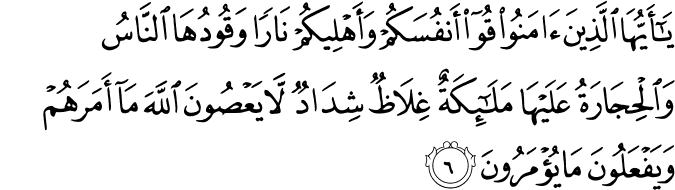
Translation: O you who have believed, protect yourselves and your families from a Fire whose fuel is people and stones […] (Surah At-Tahrim, verse 66)

This ayah illustrates our responsibility: protect yourselves, and your children, from Hellfire — a fire whose fuel is stones and men. Would you raise your children, knowingly, that they are going to be firewood, or fuel for the fire?

The Lost Legacy

Library_2_3-31-07


We live in an era where knowledge is abundant and is available at our finger tips in variety of formats (audio, video, ebooks…) and on variety of devices and platforms (tablets, smartphones, laptops….). However, we lack the enthusiasm,  passion, dedication and commitment to seeking knowledge. Here are few of the inspiring stories of past to rekindle that spark.

  • Imam Zafar said “We used to sit down and take our spots for the circle of Imam Ali Madini after the Asar prayer. The circle would take place next day. We would sit all night, for fear that if we come tomorrow, we may not find a good spot to sit”  (Subhanallah, nowadays people spend entire nights outside malls and shops to get good deals and bargains on Black Friday and Boxing Day or to meet celebrities)
  • Salaba mentions that “I saw Ibraheem harbi in gathering, seeking knowledge Arabic language and Grammar, for 50 years, never missing out” (Note that Salaba would have had to attend the same study circle for 50 years for him to notice Ibraheem Harbi’s dedication)
  • Someone asked Abdur Rahman about the knowledge he benefited from father Abu Hatim, he said “My father would be eating his food and I would be reading to him… as he walks, I would read to him..he goes into washroom, and I would read to him…my father would go inside the house – looking for something – I would still be reading to him.”  Abdur Rahman then told his own story: “We were once in Egypt for studying. We had not taken any hot soup for 7 months. During the daytime, we would go from one sheikh to another, and at night, we would sit down and exchange notes. One day, we went to one of our sheikh’s circle, we were informed that sheikh is sick. On our way back, we saw a fish,  we decided to buy it. However, when we got back home, it was time to go again to yet another lecture, so we left the fish at home. That fish stayed in the same place for 3 days. When it started to rot and smell,  we decided to eat it raw”
  • One of the teachers of Bhukari mentions that “for 30 years, I never fed myself with my own hands, my sister used to put food in my mouth, I would be busy writing hadiths”.
  • Ibn Hajar said that he read the entire Bhukari in 40 hours! and Shaheeh Muslim in 4 gatherings (each gathering is like 4 hours, so in 16 hours)

More stories to follow in the next post…..Stay tuned…

Don’t Hesitate: Lessons from the Battle of Mu’tah

opportunity

One of the unique characteristics of the battle of Mu’tah is that rasulullah (salallahu alayhi wa sallam) appointed not one, but three commanders in the chain of command:

`Abdullah bin ‘Umar said: Allah’s Messenger (salallahu alayhi wa sallam) appointed Zaid bin Haritha as the commander of the army during the Ghazwa of Mu’tah and said, “If Zaid is martyred, Ja’far should take over his position, and if Ja’far is martyred, Abdullah bin Rawaha should take over his position.” (Saheeh Bukhari)

The Caller Footsteps


“There has certainly been for you in the Messenger of Allah an excellent pattern for anyone whose hope is in Allah and the Last Day and [who] remembers Allah often.” [33:21].

No matter what stage of life we are going through, or whatever roles we are trying to fill: be it be as father, husband, son, friend, leader and others, we will always find guidance in the life of our beloved Prophet(peace be upon him). One such area of guidance is for the da’ee – people who call muslims and non muslims alike to the path of the Allah. In this paper, we will see glimpses of the best methodology, examples and guidelines for a da’ee from the Meccan era of the Seerah. Here are the 10 lessons:

A Legend in the Making: Imam Bukhari’s Early Life

Imam Bukhari, rahimahullah, is now a well-known scholar because of his saheeh collection of ahadith. It took him years to finish. But, this was not the beginning of his fame; in fact, the Muslims and scholars saw, from an early time, his intellectual strength and capability; he achieved fame well before he completed his most famous book.

Now, let us breeze through some details about the early life of this great scholar.

Week 10 – Manners of Sneezing and Yawning

بِسْمِ اللَّـهِ الرَّحْمَـٰنِ الرَّحِيمِ

This is the continuation of the series, that focuses on implementing sunnah in our lives. In the last post, we talked about the manners of sleeping. In this post, we will look at the Sunnahs of sneezing and yawning:

Narrated Abu Huraira: The Prophet said, “Allah loves sneezing but dislikes yawning; so if anyone of you sneezes and then praises Allah, every Muslim who hears him (praising Allah) has to say Tashmit to him. But as regards yawning, it is from Satan, so if one of you yawns, he should try his best to stop it, for when anyone of you yawns, Satan laughs at him.” [Bhukari: English reference: Vol. 8, Book 73, Hadith 245. Arabic reference : Book 78, Hadith 6298]

O Boy – Ya Ghulam!

بِسْمِ اللَّـهِ الرَّحْمَـٰنِ الرَّحِيمِ

This is the continuation of the series, that focuses on implementing sunnah in our lives.

Here is the sunnah items, we will be focusing on in this week:

Click here to show evidences/reference links

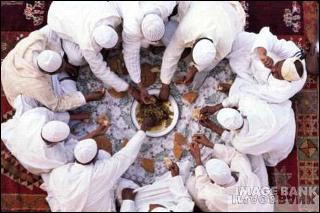
Sunnah’s of Eating:

After Eating:

A Siwaak a Day

This is the continuation of the series, that focuses on implementing sunnah in our lives. I hope everyone had emaan rushed Ramadhan and you were able to apply the things we learned in this series.

Here is the sunnah items, we will be focusing on in this week:

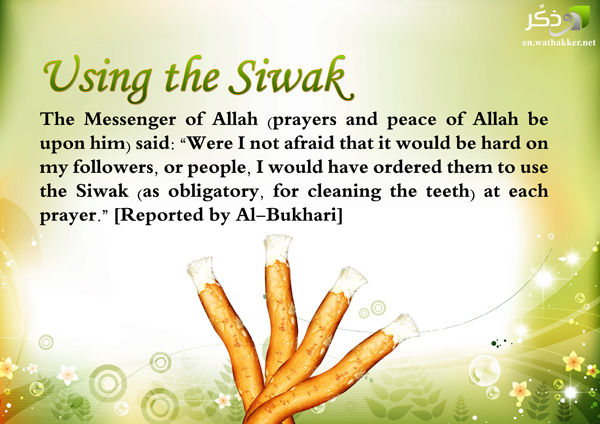
Using Siwak:

Action Item: