Islam

Specific vs. Non-Specific Commodities
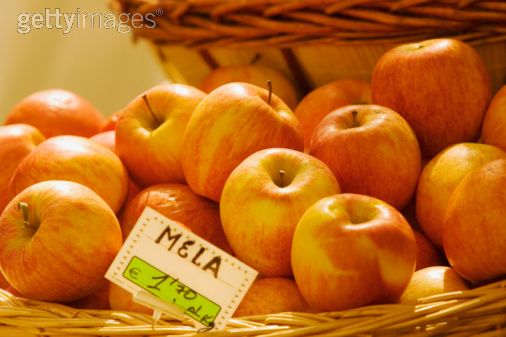
Several apples in a basket

In Islamic Finance, the shari’ah differentiates between two types of commodities (this is just one differentiation): specific, and non-specific.

Specific: “I’ll sell you this Saheeh Bukhari printed in 2004 by Dar-us-Salaam that I’m holding in my hand.”

Non-Specific: “I’ll sell you a copy of Saheeh Bukhari printed in 2004 by Dar-us-Salam.”

So if you own some large amount of inventory, or you sell in volume, or you have a bookstore, etc. you are probably selling non-specific items. Like those apples above. If you’re using Craig’s List, or eBay, you’re likely selling specific items (unless you’re bulk-selling).

What is a Mursal Hadith?

In the sciences of hadith, there’s something called a “mursal” hadith. What exactly is a mursal hadith? What is it’s status? What are the fiqh rulings on mursal ahadith? And why does it matter?

(Ok, for the answer to the last question, read and learn about the science of hadith. In a sentence: Scholars have devised an extremely rigorous process to determine which hadith are authentic, and which are not. You wouldn’t want to spend your whole life following a “hadith,” only to find out it really wasn’t legit, do you?)

Israel Bombs Gaza Again

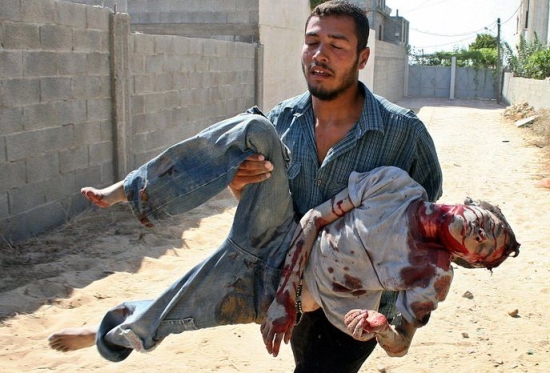
Israel is bombing Gaza. Again. In two days, there are 400 dead and 1400 injured. Hospitals overflowing, boycotts, blood, and dead bodies…

The Prophet (صلى الله عليه و سلم) said the Muslim ummah is like one body–if one part hurts, the whole body feels it and responds.

Do you feel the pain?

There are countless websites, emails, etc. that speak about this. We’re not going to reiterate all the points. Read about it here. Those are your brothers and sisters, your mothers and fathers.

Forgiveness After Forgiveness After Forgiveness

There’s a beautiful du’a that Allah mentions near the end of Surah Baqarah:

وَاعْفُ عَنَّا وَاغْفِرْ لَنَا وَارْحَمْنَا

Translation: So do ‘affuw on us. And forgive us. And have mercy on us. [Surah Baqarah, verse 286]

Allah mentions three things, in order:

  1. ‘Affuw ‘annaa: Affuw linguistically means to erase something; to obliterate something; to completely destroy something and leave no traces of it whatsoever. This du’a is saying: make affuw of our sins. Remove them completely.
  2. Waghfir lanaa: Ghafira linguistically means to protect–that’s why a helmet is called a mighfaar. Read up about Allah’s two names: Al-Ghafuwr and Al-Ghaffaar. Here, the du’a is saying: and if you do not ‘affuw our sins, forgive us, and protect us from the consequences of them.
  3. Warham naa: Rahmah is mercy; Allah has two names related to this quality–Ar-Rahman and Ar-Raheem. Here, the du’a is saying: and if you do not even forgive our sins, then have mercy on us! Subhanallah!

What an amazing du’a! Do affuw of our sins; and if not, forgive us and protect us from their effects; and if not, have mercy on us!

Become a Sadaqa Millionaire

How would you like to give sadaqa? You might say “sure, I’d like to do it–but I have no money!” What if I told you there’s a way to give sadaqa that doesn’t require money? That, in fact, you could even out-class the rich people in their sadaqa! All it takes is a little time and effort!

Would you be interested?

One of the things the companions used to do is compete with each other in good deeds. Even if they were doing more good deeds than the majority of companions, if there were a few people (or even one person) doing more than them, they would strive to beat that person in good deeds. (And among other things, they used to ask frequently: Which is the MOST beloved deed to Allah?)

What Made the Companions Special

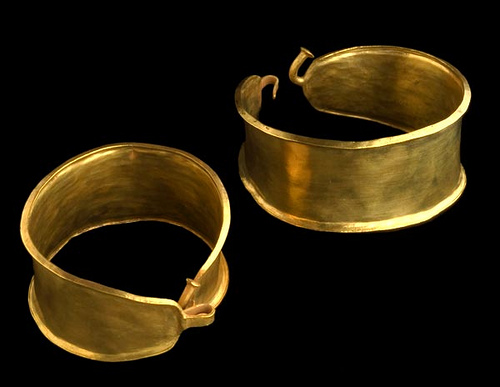
In a report by Abdullah bin `Amr bin `Aas (radiallahu ‘anhu), he related that a woman came to the Messenger of Allah with her daughter. On the daughter’s wrist were two heavy gold bracelets. The Messenger asked her, “Do you pay Zakaat on this?” She replied, “No.” The Messenger said: “Would it please you that Allah will encircle you with two bracelets of fire?” The reporter commented that she took them off and threw them down in front of the Messenger, and said: “They are for Allah and his Messenger.” [Recorded in Ahmed, Tirmidhi]

Allah’s Knowledge

We take it for granted that Allah has infinite knowledge. But what does this mean? Let’s take a “tour,” if you like, of some of the things Allah knows.

There are 6-8 billion people on the face of the earth. That’s 6 * 1000 * 1000 * 1000. That’s a lot of people! Can you imagine learning 6 names? Or 60? Or 6000? But Allah knows their names–all 6,000,000,000 of them. And He knows everything they’re going to do today. And tomorrow. And the day after that. And the day after THAT.

Qur’anic Oath: Tallahi!

Bismillah

Aqsaam (oaths) in the Qur’an are a very fascinating subject that we should study and focus on more. There are a few components needed for a qasm (oath) to occur. One of them is the harf qasm, a letter that shows there is an oath being taken.

There are a few letters in the Qur’an that are used as harf qasm, for example, Allah ta’ala says “wal ‘aadiyaati dhabhaa”. The harf qasm in this oath is the letter wow (و).

A Concise Du’a for Guidance

Bismillah.

One of the things I decided to blog about is my own personal du’a–it’s not lifted straight from the pages of the Qur’an or Sunnah, but it draws from them. My goal was to have a du’a that:

  • Is short, so I can recite it in sujood every rakah or every salah
  • Is encompassing–covers every aspect (in this case, of the akhirah)
  • Is easy to remember, so I can remember it as needed!
  • Is easy, not full of hard-to-pronounce or hard-to-remember words.

The du’a is: