Ramadan

To Do List After Ramadan
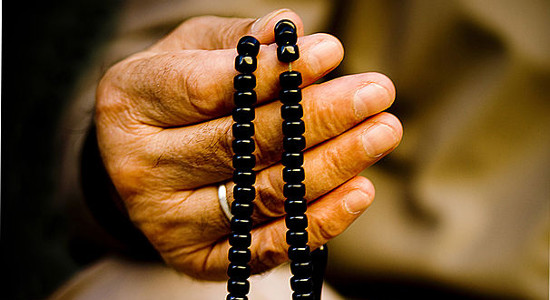
prayer-beads

Image credit: Wikipedia

Ramadan ended. (May Allah accept all our prayer, fasting, du’a, and good deeds during this blessed month — ameen!) How should we, as Muslims, act now?

We graduated from the school of Ramadan; can life simply return to normal?

Our scholars mention a few points about this:

  • Allah says, in surah Baqarah, that Ramadan was prescribed on us in the hope that we gain taqwa. Did we achieve that goal of the school of Ramadan? Or did we simply fast because of our parents, our friends, our spouse, or our culture?
  • The continuation of our deeds shows the acceptance of our deeds (even if we continue them at a smaller scale than during Ramadan).
  • We live life for a purpose, not haphazardly; just like we create dunya goals (get a degree, get a job, get a spouse, get a house, etc.) we must create deen goals, and work towards improving ourselves. Ramadan puts us through an obligatory one-month “boot camp” of self-improvement every year.

Did you pass the test of Ramadan? Did you benefit from Ramadan? The litmus test is: are you better after Ramadan than you were before Ramadan?


Ramadan Retrospective

Eid Mubarak! As the sahaba would tell each other: May Allah accept our good deeds and your good deeds (from Ramadan). Ameen!

Ramadan is still fresh in your mind; the long days of fasting, the pain in your legs and back from taraweeh, and most of all, that biting regret that you didn’t do enough.

Would you like to make the next Ramadan even better? With only five minutes worth of effort?! Try this out: create a new document (by hand or computer, whatever you like) called “Ramadan Retrospective.” List out the following:

Plan for the Last 10 Nights of Ramadan

make an action plan for the last ten nights of Ramadan

Ramadan is coming to a close. Like the last half-kilometer of a 10km race, the finish-line is in sight. This is the time to pull out all the stops and to sprint, flat-out. This is the time when Laylatul-Qadar, the night where deeds are multiplied by more than one thousand, hides.

Ramadan Resource Bonanza!

treasure chest.
What’s better than a chest of gold and jewels? A post full of Qur’an and sunnah!

Bismillah.

This is a guest post by an author who compiled a wide number of resources related to fasting, reciting Qur’an, and sincerity of intention. This is a great resource of ahadith and ayaat related to fasting. May Allah grant them a great reward (ameen!) and forgive any mistakes I have made in re-formatting it and linking all the sources to their citations.

Which Ramadan Opinion Do I Pick?

crescent-moon
Sight the moon, and if you cannot, then count the days …

Ramadan is coming, alhamdulillah. Ramadan, a time when all the shayateen are chained up, as the Messenger of Allah (salallahu alayhi wa sallam) said:

Narrated Abu Huraira (radiallahu ‘anhu): Allah’s Messenger (salallahu alayhi wa sallam) said, “When the month of Ramadan starts, the gates of the heaven are opened and the gates of Hell are closed and the devils are chained.”[Saheeh Bukhari, volume 3, book 31, #123]

Praying Isha While The Imam Prays Taraweeh

It’s well-known in our communities, alhamdulillah, that you can pray ‘Isha behind an imam praying Taraweeh. (Which happens if you run late, very late, indeed!) But we’re just going to dive a bit into the details of how and why this is.

Note: We do not issue fatwa! For that, please consult Islam Question and Answer!

First of all, there is a difference of opinion among the scholars about whether this is permissible or not. Let’s examine the opinion of those who say it’s not permissible (which includes the majority of companions).

Local or International Sighting?

As yet another Ramadan comes, the question arises? should we follow the opinion of the local moonsighting, or the international moonsighting? Great arguments erupt, people insulting each other left and right, breaking ties, breaking families …

Brothers and sisters, ya Muslims, WAKE UP!! Realize that all the opinions which are backed by the scholars are correct!

What? All of them?

Yes. all of them.

How does that work? In Islam, we have scholars (‘ulama), and we have people who have the knowledge and tools and responsibility to give fatwa (mujtahidoon). For us, the ignorant lay-people, we don’t have the tools or knowledge; we are sinful if we try and make fatwa out of ignorance (even if we’re right–the way a random guy off the street is still liable to be hauled into jail for doing brain surgery, even if he succeeded).

The Islamic Diet

Bismillah.

We are constantly bombarded in this society with diet after diet, new ways to loose weight or supposedly be ‘healthy’. As Muslims, we know that Allah (سبحانه و تعالى) sent the Qur’an to us as a huda, a guide. Not only is the Qur’an a guidance for us in our beliefs, our worship and character, but we learn basic lessons on how to live our lives in a way that is pleasing to Allah. So rather than turning to outside sources for guidance in these basic matters, turn to the Qur’an, for by Allah you will find your answer.