Tafseer Surah Qadar: What’s Better Than 1000 Months?

This is post #25 in our series on Tafseer of Juz ‘Amma (click the link to see all posts in this series).

Reason of Revelation

The Messenger of Allah (salallahu alayhi wa sallam) told the companions about a man of the previous nations; a man who lived and fought jihad for over 1000 months (roughly 83 years, 4 months). (In case you didn’t know, the previous nations lived longer than us–like Prophet Nuh (alayhi salaam), who did da’wah for nearly 1000 years.)

The companions were amazed, and they said: how can we compete with him?

And subhanallah, this is a gem. Look at the companions. They prioritized and competed for the akhirah. Subhanallah to the point that, they don’t just try to do “some good deeds before I die;” not enough. They competed with each other–but even that was not enough. Rather, they competed with all of the Muslims, ever, starting from the time of Prophet Adam, until the Day of Judgment.

We need to really look at ourselves and see, how much are we like them? Or are we just vying for bigger houses, better cars–more dunya?

Tafseer Surah Abasa: What Really Matters?

imperial crown
It’s not dunya status that matters. Allah teaches us this again in Surah Abasa–it’s the one with taqwa.

This is post #24 in our series on Tafseer of Juz ‘Amma (click the link to see all posts in this series).

How would you feel if someone you love corrected you, in public, in front of everyone else? Would you feel condemned, or criticized? Would you take it more seriously than someone you don’t like criticizing you?

And what if Allah, the Lord of the Universe, criticized you … in public?

Ilm Fruits on Twitter and Facebook!

As-salaamu ‘alikum wa rahmatullah,

We are very pleased to announce that Ilm Fruits has now extended to Facebook and to Twitter.

Rather than, like other Islamic organizations and groups, following hype, we hope that this will allow us to solve the following problems:

  1. Facebook Updates: Would you like to see new posts on Ilm Fruits immediately in Facebook? We’ve added a Facebook user to facilitate this; just add it as your friend.
  2. Feedback: The point of our twitter user (and facebook user) is to allow people to give us more feedback, beyond just the blog commenting system.

So start using them! We hope this move will allow us to connect more with you, the end-users of our blog. May Allah put barakah in our efforts and accept them (ameen ya rabbi!)

Tafseer of Surah Tawheed

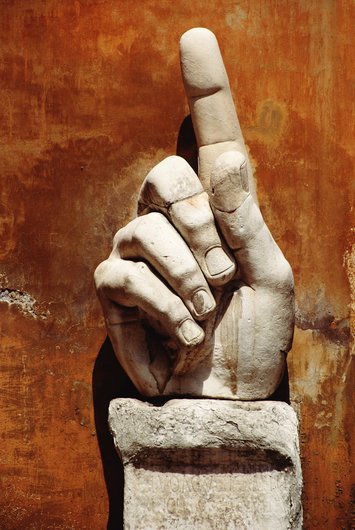
a hand with the shahada finger pointing

This is post #23 in our series on Tafseer of Juz ‘Amma (click the link to see all posts in this series).

Allah says, in Surah Tawheed, also known as Surah Ikhlas:

قُلْ هُوَ اللَّهُ أَحَدٌ

اللَّهُ الصَّمَدُ

لَمْ يَلِدْ وَلَمْ يُولَدْ

وَلَمْ يَكُن لَّهُ كُفُوًا أَحَدٌ

Translation: Say, “He is Allah , [who is] One, Allah , the Eternal Refuge [As-Samad], He neither begets (gives birth to) nor is born, Nor is there to Him any equivalent.” [Surah Ikhlas]

7 Lessons From the Death of Michael Jackson

gold-plated coffin
Michael Jackson’s $25,000 gold-plated bronze coffin (hand-polished).

This post is a brief and timely diversion from our tafseer series.

Michael Jackson was one of the most popular and well-known celebrities and icons of the western world; and now, he’s dead. As Muslims, what lessons can we learn from this event? I’ve listed below some of the lessons that came to my mind:

  1. Your Life is a Box. The Messenger of Allah (salallahu alayhi wa sallam) once drew a dot in the sand, and lines radiating out from it; he said (paraphrased), “this is the human, and their plans/desires.” To live forever, to amass huge wealth, to do this or that thing in their life … he (salallahu alayhi wa sallam) then drew a box that cut through those lines, and he said (paraphrased): “This is a human’s life.” No matter what you intend, your goals, your dreams, your hopes, when Allah pulls the plug, He pulls the plug.
  2. Your Appointment is Already Scheduled. If anyone would’ve escaped death by virtue of wealth, or status, or love of the people, it would’ve been Jackson–but he didn’t. He was a celebrity, and perhaps one of the top celebrities; and yet, all that did nothing for him–because the appointment with Malik-al-Mawt, the angel of death, cannot be delayed even one second.
  3. You Die Doing What You Love. There was a statement (can’t remember the source) that malik al-mawt comes to a person when they’re doing the thing that they love most. If you look historically, you’ll see the validity; and here, too, it happened while Michael Jackson was planning the ultimate comeback. This is a wake-up call to everyone who thinks they’ll repent “later.” Later never comes; and by then, maybe your heart is already sealed from all the sins you accumulated on it. Turn back to Allah NOW. Don’t set yourself up to die in the midst of sins upon sins.
  4. One Man Can Make a Difference. Rasulullah (salallahu alayhi wa sallam) changed the world utterly and completely. Michael Jackson touched the lives of millions of people across the globe. Take heart from it: you, too, can make a difference in the world. So dream big, and have big goals. As Muhammad Alshareef reminded us, the reward is based on the intention–so if you intend huge, massive, amazing good deeds (with a sincere intention to do them–and the proof is in the action you take towards them), then you’ll get the reward insha’Allah, whether you make it or not! How awesome is that?
  5. Start Early. One of the things about Michael Jackson is that he started practicing his trade at a very young age; while most people spend their time here and there, very few have the focus and willpower to remain upon one thing for hours upon hours. If you focus, and start early, you can achieve an extremely high degree of proficiency. As one rule of thumb says, it takes 10,000 hours (3.5 years if you work at it 8 hours a day) to become a world-class master. So choose what to work on, and start working on it!
  6. Knowledge that Benefits. Rumours spread upon Michael Jackson’s death about whether he’s a Muslim or not; Muslim Matters has several posts on this topic. In the end, this is a lesson that we should learn what benefits us, and leave what doesn’t. Are you going to witness his janaazah personally? Then what difference does it make? The fact that there are still rumours about it, only guarantees that people will spend hours and hours and hours reading about it. (And then we complain that we “don’t have time to read Qur’an,” hmm …)
  7. People Forget. At time of writing, it’s been about two and a half weeks since he died. Already, the media coverage is decreasing; within a month, a year, two, ten, hardly anybody will remember him or care anymore. This already happened to so many people before us–scholars, celebrities, scientists, charitable people, even prophets, who had their teachings left behind. So then why are we trying to earn the love of the people? We spend so much time and money and energy on it now, and if we disappear for even a year, we’re forgotten. So strive for the love of Allah instead, because the reward of that has no ending.

Wallahu ta’ala ‘alam. I want to reiterate that these are my personal reflections on this event; regardless, we should take benefit from those things around us, and leave what doesn’t benefit us.

3 Shields of Protection From Supernatural Forces

This is post #22 in our series on Tafseer of Juz ‘Amma (click the link to see all posts in this series).

a blinding light emitting from a forest at nightThe protection of Allah is easily earned and very, very powerful.

Muslims love talking about Jinns and black magic. Yet, when it comes to inoculating themselves from supernatural forces, Muslims are often either ignorantly doing most of what they need to do, or proverbially standing on the interstate highway, woefully oblivious of thousands of cars speeding by at near-miss distances. And many of us, or people we know, personally do get hit.

Yet even the newest Muslim is often quickly equipped with powerful shields of protection against these forces. What are they?

The Carpet-Bombed Elephant

a big church

This is post #21 in our series on Tafseer of Juz ‘Amma (click the link to see all posts in this series).

The Sabab-un-Nuzool (reason of revelation) for Surah Fil well-known; you can read all about it, along with some lessons and gems, in this post by Sr. Mariam 3.36. Please read it, since I won’t touch on those points.

I will mention, however, two points not mentioned there–that the Christian tyrant king who brought his elephant, why did he decide to destroy the Ka’bah? He saw how well-known the Ka’bah was, and how great to the people; so he built a church to rival that.

Say: O You Kafiroon …

Note: This is post #20 in our series on Tafseer of Juz ‘Amma (click the link to see all posts in this series).

In Surah Kafiroon, Allah says:

قُلْ يَا أَيُّهَا الْكَافِرُونَ

لَا أَعْبُدُ مَا تَعْبُدُونَ

وَلَا أَنتُمْ عَابِدُونَ مَا أَعْبُدُ

وَلَا أَنَا عَابِدٌ مَّا عَبَدتُّمْ

وَلَا أَنتُمْ عَابِدُونَ مَا أَعْبُدُ

لَكُمْ دِينُكُمْ وَلِيَ دِينِ

Translation: Say, “O disbelievers, I do not worship what you worship. Nor are you worshippers of what I worship. Nor will I be a worshipper of what you worship. Nor will you be worshippers of what I worship. For you is your religion, and for me is my religion.” [Surah Kafiroon]

The mushrikeen (polytheists) of Mecca tried many, many different techniques to get the Prophet (salallahu alayhi wa sallam) to stop spreading Islam.

Before this ayah was revealed, they decided to make a pact with him. They said, “Look, how about this–you worship our gods for one year, and we’ll worship your God for one year.” And to sweeten the deal: “And, we’ll go first.”

And they applied the Broken Record technique. Whenever the Prophet (salallahu alayhi wa sallam) would try to speak to them about Islam, they would only repeat this.

And he, salallahu alayhi wa sallam, refused.

Those of you who are wondering why–although it seems on the surface like a fair trade, it’s not. Allah does not forgive shirk, worshipping other than him; not even a single sujood, or a single du’a, none of it is acceptable.

So clearly, this is not a contract the Messenger of Allah could engage with. So he refused.

And he refused.

And he refused.

Then, the Mushrikeen said, “ok, how about this–just speak highly of our gods, and we’ll do the same for you.” A smaller compromise.

And whenever people approached them, they would say, “Well, we’re trying to compromise (like we’re the good ones in this deal–even though we kill our daughters and murder on whims and …), but he’s not agreeing.”

So the Prophet (salallahu alayhi wa sallam) went to the ka’bah.

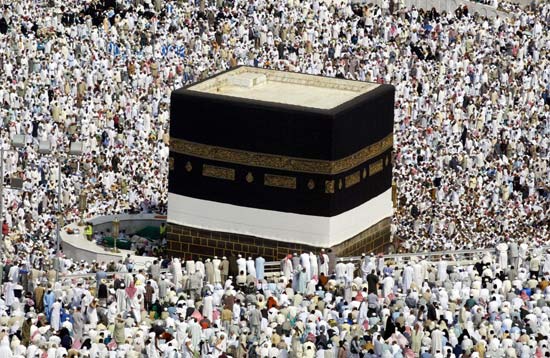
The Ka'bah, the House of Allah

Mushrikeen were there. And in front of everybody he said:

Those Who Show Off in Their Salah

Note: This is post #19 in our series on Tafseer of Juz ‘Amma (click the link to see all posts in this series).

In Surah Ma’oon, Allah says:

فَوَيْلٌ لِّلْمُصَلِّينَ

الَّذِينَ هُمْ عَن صَلَاتِهِمْ سَاهُونَ

الَّذِينَ هُمْ يُرَاءُونَ

وَيَمْنَعُونَ الْمَاعُونَ

Translation: So woe to those who pray; those who are heedless of their prayer, those who make show [of their deeds]; And withhold [simple] assistance (al-ma’oon). [Surah Ma’oon, verses 4-7]

Allah says, “so woe to those who pray.” Don’t stop at this ayah! People who pray are not cursed by Allah! Allah continues: those who show off in their prayer, …

Do YOU Encourage Good?

Note: This is post #18 in our series on Tafseer of Juz ‘Amma (click the link to see all posts in this series). Insha’Allah we’ll be kicking up the post frequency to three times a week in order to finish before Ramadan.

Allah says, in Surah Ma’oon:

أَرَأَيْتَ الَّذِي يُكَذِّبُ بِالدِّينِ

فَذَلِكَ الَّذِي يَدُعُّ الْيَتِيمَ

وَلَا يَحُضُّ عَلَى طَعَامِ الْمِسْكِينِ

Translation: Have you seen the one who denies the Repayment? For that is the one who drives away the orphan, and does not encourage the feeding of the poor. [Surah Ma’oon, verses 1-3]

Notice the connection here–verse one, the one who denies Ad-Deen, the Day of Repayment. And verse two and three? He drives away orphans, He doesn’t encourage feeding of the poor.

It’s not that he doesn’t feed the poor. It’s that he doesn’t encourange feeding the poor.