Tazkiyyah

Four Practical Steps to Taqwa, Step 1: Muhasabah

Abacus

Photo Credit: Pienw (Flickr)

The first practical step to gaining taqwa is accountability, known as muhasabah in Arabic; taking account of your actions. We see this concept from the beginning of Islamic history.:

In the Qur’an

In Surah Al-Hashr, Allah says:

يا ايها الذين امنوا اتقوا الله ولتنظر نفس ما قدمت لغد واتقوا الله ان الله خبير بما تعملون

Translation: O you who have believed, fear Allah . And let every soul look to what it has put forth for tomorrow – and fear Allah . Indeed, Allah is Acquainted with what you do. (Surah Hashr, verse 18)
I’m Drowning and I Don’t Know Why

Have you ever felt like you were drowning? Submerged in the depths of the world? With darkness encompassing you everywhere you went?

I have.

And what makes the situation even more difficult to swim through is when you don’t know why. Everything seems to be on point; you’re praying, going to the masjid, giving charity, etc. yet that feeling of drowning is ever-so-present.

_What’s going on? _

I want you to imagine an empty jar with dirt in it (or just look below).

To Do List After Ramadan

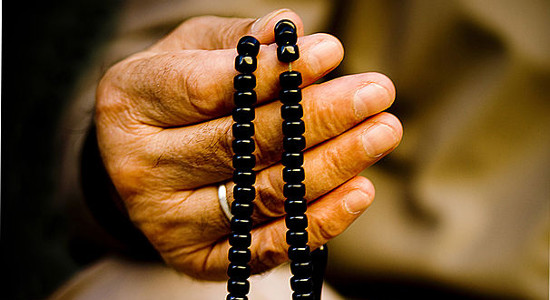
prayer-beads

Image credit: Wikipedia

Ramadan ended. (May Allah accept all our prayer, fasting, du’a, and good deeds during this blessed month — ameen!) How should we, as Muslims, act now?

We graduated from the school of Ramadan; can life simply return to normal?

Our scholars mention a few points about this:

  • Allah says, in surah Baqarah, that Ramadan was prescribed on us in the hope that we gain taqwa. Did we achieve that goal of the school of Ramadan? Or did we simply fast because of our parents, our friends, our spouse, or our culture?
  • The continuation of our deeds shows the acceptance of our deeds (even if we continue them at a smaller scale than during Ramadan).
  • We live life for a purpose, not haphazardly; just like we create dunya goals (get a degree, get a job, get a spouse, get a house, etc.) we must create deen goals, and work towards improving ourselves. Ramadan puts us through an obligatory one-month “boot camp” of self-improvement every year.

Did you pass the test of Ramadan? Did you benefit from Ramadan? The litmus test is: are you better after Ramadan than you were before Ramadan?

Pray as if This is your Last Prayer

99670325-565x376_4

You often hear the khatheeb or imam, right before the salah starts, saying “pray as if this is your last prayer.” Sure, but what does it mean, and how do we do it?

As one of the righteous people of the past said:

Pray as if Jannah is on your right side, Hellfire is on your left side, the siraat (bridge over Hellfire) is under you, the angel of death is behind you (waiting to take your soul any minute), your sins are above you (waiting to crush and destroy you), and this is the last deed, the one that decides if you go to Jannah or Jahannam forever.

Follow the Sunnah – Week 2

Last week, we started a new series. The goal of the series is to learn and implement the sunnah in our lives. We started with the sunnah of our beloved Prophet (May Allah’s peace and blessings be upon him) on waking up. I hope all of you have been practicing that sunnah. Here is the sunnah for this week:

Entering the Washroom:

After Entering the Washroom:

Beacons of Light

The following is a guest post from I Got it Covered, a blog about hijab, Islam, and life. You can find the original article here.

In the time of ‘Umar ibn Al-Khattab, radiAllahu anhu, the second Khalifah, it was mandatory upon all the young girls to learn Surat an-Noor.

From the beauty of this Surah is that it begins with, “[This is] a surah which We have sent down and made [that within it] obligatory and revealed therein verses of clear evidence that you might remember” [Surat an-Noor: 1]. Although the whole Qur’an is obligatory upon us, this Surah begins with that commandment, as a special reminder. And then, later on in the Surah, comes the commandment of hijab [see Surat an-Noor: 31].

Tafseer Surah Tariq: You Will Be Recreated

This is post #37 in our series on Tafseer of Juz ‘Amma (click the link to see all posts in this series).

Allah says, in Surah Tariq:

وَالسَّمَاءِ وَالطَّارِقِ

وَمَا أَدْرَاكَ مَا الطَّارِقُ

النَّجْمُ الثَّاقِبُ

Translation: By the sky and the night comer (At-Tariq), And what can make you know what is the night comer? It is the piercing star. [Surah At-Taariq, verses 1-3]

As we mentioned before, one of the characteristics of early and Mecci surahs, like this one, is that they begin with a qasam — an oath, a testification. And this shows the greatness of that thing, that Allah (‘azza wa jal) is testifying by it.

Reminder Series: Seeking His Love 3

Bismillah walhamdolilah wasalatu wassalam ‘ala rasool Allah

Continuing in the ten ways to achieve the love of Allah subhanahu wa ta’ala, here are the last five points as per ibn al-Qayyim rahimuhallauh:

Sixth, observing Allaah’s kindness, goodness and bounties, both hidden and open.

It is to be aware of the vast amounts of Mercy Allah subhanahu wa ta’ala has engulfed His slaves with. It is to recognize and accept the blessings of Allah subhanahu wa ta’ala and to show thanks for it. As Allah says: “Then which of the Blessings of your Lord will you both (jinns and men) deny?” [Surah Rehman V.13]

Reminder Series: Seeking His Love 2

Bismillah walhamdolilah wassalatu wassalam ‘ala rasool Allah

Here are ten ways to attain the love of Allah subhanahu wa ta’ala, as per Ibn al-Qayyim rahimuhallah:

First, reciting the Qur’an while pondering over its meanings and what is meant by it.

Allah says, the meaning of which is: “Then do they not reflect upon the Qur’an? If it had been from [any] other than Allah , they would have found within it much contradiction” [4:82]

Reminder Series: Seeking His Love

Bismillah walhamdolilah wassalatu wassalam ‘ala rasool Allah

We live this life yearning to be amongst those whom Allah loves. On top of that, we wish and pray that Allah gives us the opportunity to be amonst the blessed who sincerly love Him. Truly, this only comes from His Will and we should beg him for that opportunity day and night.

Here is a a beautiful du’a that we have been taught by the Prophet sallalahu alayhi wasalam: