Sawm

To Do List After Ramadan
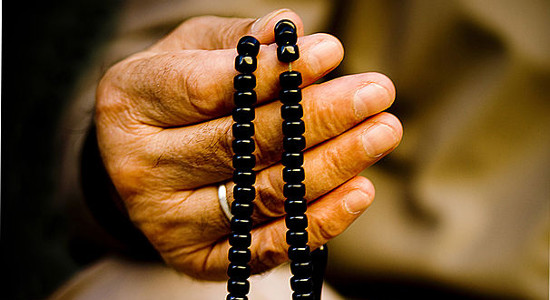
prayer-beads

Image credit: Wikipedia

Ramadan ended. (May Allah accept all our prayer, fasting, du’a, and good deeds during this blessed month — ameen!) How should we, as Muslims, act now?

We graduated from the school of Ramadan; can life simply return to normal?

Our scholars mention a few points about this:

  • Allah says, in surah Baqarah, that Ramadan was prescribed on us in the hope that we gain taqwa. Did we achieve that goal of the school of Ramadan? Or did we simply fast because of our parents, our friends, our spouse, or our culture?
  • The continuation of our deeds shows the acceptance of our deeds (even if we continue them at a smaller scale than during Ramadan).
  • We live life for a purpose, not haphazardly; just like we create dunya goals (get a degree, get a job, get a spouse, get a house, etc.) we must create deen goals, and work towards improving ourselves. Ramadan puts us through an obligatory one-month “boot camp” of self-improvement every year.

Did you pass the test of Ramadan? Did you benefit from Ramadan? The litmus test is: are you better after Ramadan than you were before Ramadan?


Powerful Tips for the Last 10 Nights

By Sheikh Tawfique Chowdhury

  1. Do not let your ‘performance’ until now affect your last 10 days. The moment of forgiveness could be today or anytime in the coming days! It is not all lost! If you sincerely wish it could have been better – Chin up and get ready to make it your best yet! Start with a positive, sincere intention!
  2. Today, take a little time to read the Tafseer of Surah al-Qadr to understand what actually happens this night! You will feel its power & greatness so much more!
  3. Do not wait for the 27th Night to give it your “all”. The entire last 10 days should be your target. Stay up each night! Would you want to miss Laylatul Qadr even “by chance”?
  4. Do not fall into any innovations/celebrations any masjid or culture might try to promote. Follow the Sunnah! The Prophet (sallAllahu ‘alaihi wa sallam) guided us simply: “Whoever stays up and prays on Laylat al-Qadr out of faith and in the hope of reward, his previous sins will be forgiven.”
  5. Memorize and keep asking the dua’ taught by Rasulullah (sallAllahu ‘alaihi wa sallam): Allaahumma innaka ‘afuwwun tuhibb al-‘afwa fa’affu ‘anni (O Allaah, You are forgiving and You love forgiveness, so forgive me).
  6. Prepare a short dua’ list. Remember this is as awesome as it ever gets for a servant of Allah! The Night of Qadr, of Destiny! Consciously pick each and everything you crucially wish for in this dunya, in your deen, family, and in your aakhirah! Don’t forget to include the brothers and sisters around the world who are suffering and in grief!
  7. Take brief naps during the day, if possible. Keep your stomach light and sleep as soon as you have prayed ‘isha. Do not delay! After a brief nap, refresh yourself and get. ready for worship.
  8. Don’t neglect your family! Rasulullah made it a point to wake up his wives throughout these nights! And yes, your children are not too young to stay up some part of the night – if they can be allowed to play video games or watch TV, they can be inspired to be up atleast for sometime! Prepare them, make them excited, plan some activities for them to do!
  9. Look the Part: The way we dress and prepare.has a big effect on our psychology. Wear your best, perfume yourself, and feel the energy!
  10. Choose a spot, whether in the Masjid or in your home, where you can have peace and solitude. Keep your mushaf, praying mat, and water at hand so that you are not distracted by constantly getting up for this or that.
  11. IMP: This is not the night to tweet pics or update FB statuses about how amazing the night is and how you are feeling & worshipping Allah! Let that be a secret between you & your Rabb! So switch off those phones, wifi, laptops and computers. Disconnect with the world, and connect with al-‘Afuww!
  12. If you find yourself feeling sleepy, vary your acts of worship. Alternate between qiyaam, heartfelt dua’a, reading the Qur’an. Do not spend the night listening to lectures or recitations. Or do it only for a short while when you feel the sleep coming on!
  13. Patience is the Key: The last 10 days might be tiring. You might still have work or school. This is the time to bear all that hardship, and keep firm sabr. Think how Allah has blessed you with this tremendous opportunity that might NEVER come again in your life again. If you knew for sure that this was your last Ramadan , if you knew certainly that Jannah was up for grabs, wouldn’t you sprint for it no matter what it takes?
  14. This is most important: Keep husn adh-dhann bi Allah (good expectations from Allah). When you ask, remember you are asking the Most Generous King. If you hope for the best, He will give you the best. Don’t hold back. Trust in Him, pour out your heart in front of Him, and let no doubt, no barrier, no evil thoughts keep you away from Ar-Rahman, Ar-Raheem!

Allahumma ballighna laylatal qadr..

Ramadan Retrospective

Eid Mubarak! As the sahaba would tell each other: May Allah accept our good deeds and your good deeds (from Ramadan). Ameen!

Ramadan is still fresh in your mind; the long days of fasting, the pain in your legs and back from taraweeh, and most of all, that biting regret that you didn’t do enough.

Would you like to make the next Ramadan even better? With only five minutes worth of effort?! Try this out: create a new document (by hand or computer, whatever you like) called “Ramadan Retrospective.” List out the following:

Ramadan Resource Bonanza!

treasure chest.
What’s better than a chest of gold and jewels? A post full of Qur’an and sunnah!

Bismillah.

This is a guest post by an author who compiled a wide number of resources related to fasting, reciting Qur’an, and sincerity of intention. This is a great resource of ahadith and ayaat related to fasting. May Allah grant them a great reward (ameen!) and forgive any mistakes I have made in re-formatting it and linking all the sources to their citations.

Which Ramadan Opinion Do I Pick?

crescent-moon
Sight the moon, and if you cannot, then count the days …

Ramadan is coming, alhamdulillah. Ramadan, a time when all the shayateen are chained up, as the Messenger of Allah (salallahu alayhi wa sallam) said:

Narrated Abu Huraira (radiallahu ‘anhu): Allah’s Messenger (salallahu alayhi wa sallam) said, “When the month of Ramadan starts, the gates of the heaven are opened and the gates of Hell are closed and the devils are chained.”[Saheeh Bukhari, volume 3, book 31, #123]

The Reasons Behind Seasons

Bismillah.

Why did Allah (سبحانه وتعالى) create seasons? All of this–snow, leaves changing, hot summer days and freezing winter nights. In some countries–like Canada, and the US–you have places where Isha time starts around 11pm, or 12am (midnight), and Fajr starts arond 2-3am! You also have days where Isha starts at 6pm, and Fajr starts around 7am.

What can we learn from this?

The Prophet (صلى الله عليه و سلم) gives this away when he narrates: “Allah (سبحانه وتعالى) made the night short so you can pray, and the day short so you can fast.”

Praying Isha While The Imam Prays Taraweeh

It’s well-known in our communities, alhamdulillah, that you can pray ‘Isha behind an imam praying Taraweeh. (Which happens if you run late, very late, indeed!) But we’re just going to dive a bit into the details of how and why this is.

Note: We do not issue fatwa! For that, please consult Islam Question and Answer!

First of all, there is a difference of opinion among the scholars about whether this is permissible or not. Let’s examine the opinion of those who say it’s not permissible (which includes the majority of companions).

Local or International Sighting?

As yet another Ramadan comes, the question arises? should we follow the opinion of the local moonsighting, or the international moonsighting? Great arguments erupt, people insulting each other left and right, breaking ties, breaking families …

Brothers and sisters, ya Muslims, WAKE UP!! Realize that all the opinions which are backed by the scholars are correct!

What? All of them?

Yes. all of them.

How does that work? In Islam, we have scholars (‘ulama), and we have people who have the knowledge and tools and responsibility to give fatwa (mujtahidoon). For us, the ignorant lay-people, we don’t have the tools or knowledge; we are sinful if we try and make fatwa out of ignorance (even if we’re right–the way a random guy off the street is still liable to be hauled into jail for doing brain surgery, even if he succeeded).

The Islamic Diet

Bismillah.

We are constantly bombarded in this society with diet after diet, new ways to loose weight or supposedly be ‘healthy’. As Muslims, we know that Allah (سبحانه و تعالى) sent the Qur’an to us as a huda, a guide. Not only is the Qur’an a guidance for us in our beliefs, our worship and character, but we learn basic lessons on how to live our lives in a way that is pleasing to Allah. So rather than turning to outside sources for guidance in these basic matters, turn to the Qur’an, for by Allah you will find your answer.

Fasting in Muharram

Bismillah.

The sacred month of Muharram is now upon us, and a new year has begun alhamdulillah. InshaAllah I wanted to remind you all and myself of the great sunnan this month has for us:

Rasulllah (صلي الله عليه وسلم) said: “The best of fasting after Ramadaan is the month of Allah, Muharram, and the best of prayer after the obligatory prayers is prayer at night (qiyaam al-layl).” [Saheeh Muslim, #1163]