Ibadah

New Project Unveiled: Salah Support

Bismillah.

Alhamdulillah, we’ve been working in the background for a while to launch a new project. Jazakumullahu khayran to everybody who helped out, may Allah keep giving you reward for it insha’Allah long after your bones are dust–allahumma ameen!

First, check yourself, and fill out the poll below:

[poll id=”3″]

If you haven’t guessed, our new project is: Salah Support, a forum where you can find resources on salah–everything from videos on how to pray, to ebooks on khushoo’, to creative alarms for Qiaaym-ul-Layl.

Which Ramadan Opinion Do I Pick?

crescent-moon
Sight the moon, and if you cannot, then count the days …

Ramadan is coming, alhamdulillah. Ramadan, a time when all the shayateen are chained up, as the Messenger of Allah (salallahu alayhi wa sallam) said:

Narrated Abu Huraira (radiallahu ‘anhu): Allah’s Messenger (salallahu alayhi wa sallam) said, “When the month of Ramadan starts, the gates of the heaven are opened and the gates of Hell are closed and the devils are chained.”[Saheeh Bukhari, volume 3, book 31, #123]

3 Shields of Protection From Supernatural Forces

This is post #22 in our series on Tafseer of Juz ‘Amma (click the link to see all posts in this series).

a blinding light emitting from a forest at nightThe protection of Allah is easily earned and very, very powerful.

Muslims love talking about Jinns and black magic. Yet, when it comes to inoculating themselves from supernatural forces, Muslims are often either ignorantly doing most of what they need to do, or proverbially standing on the interstate highway, woefully oblivious of thousands of cars speeding by at near-miss distances. And many of us, or people we know, personally do get hit.

Yet even the newest Muslim is often quickly equipped with powerful shields of protection against these forces. What are they?

Say: O You Kafiroon …

Note: This is post #20 in our series on Tafseer of Juz ‘Amma (click the link to see all posts in this series).

In Surah Kafiroon, Allah says:

قُلْ يَا أَيُّهَا الْكَافِرُونَ

لَا أَعْبُدُ مَا تَعْبُدُونَ

وَلَا أَنتُمْ عَابِدُونَ مَا أَعْبُدُ

وَلَا أَنَا عَابِدٌ مَّا عَبَدتُّمْ

وَلَا أَنتُمْ عَابِدُونَ مَا أَعْبُدُ

لَكُمْ دِينُكُمْ وَلِيَ دِينِ

Translation: Say, “O disbelievers, I do not worship what you worship. Nor are you worshippers of what I worship. Nor will I be a worshipper of what you worship. Nor will you be worshippers of what I worship. For you is your religion, and for me is my religion.” [Surah Kafiroon]

The mushrikeen (polytheists) of Mecca tried many, many different techniques to get the Prophet (salallahu alayhi wa sallam) to stop spreading Islam.

Before this ayah was revealed, they decided to make a pact with him. They said, “Look, how about this–you worship our gods for one year, and we’ll worship your God for one year.” And to sweeten the deal: “And, we’ll go first.”

And they applied the Broken Record technique. Whenever the Prophet (salallahu alayhi wa sallam) would try to speak to them about Islam, they would only repeat this.

And he, salallahu alayhi wa sallam, refused.

Those of you who are wondering why–although it seems on the surface like a fair trade, it’s not. Allah does not forgive shirk, worshipping other than him; not even a single sujood, or a single du’a, none of it is acceptable.

So clearly, this is not a contract the Messenger of Allah could engage with. So he refused.

And he refused.

And he refused.

Then, the Mushrikeen said, “ok, how about this–just speak highly of our gods, and we’ll do the same for you.” A smaller compromise.

And whenever people approached them, they would say, “Well, we’re trying to compromise (like we’re the good ones in this deal–even though we kill our daughters and murder on whims and …), but he’s not agreeing.”

So the Prophet (salallahu alayhi wa sallam) went to the ka’bah.
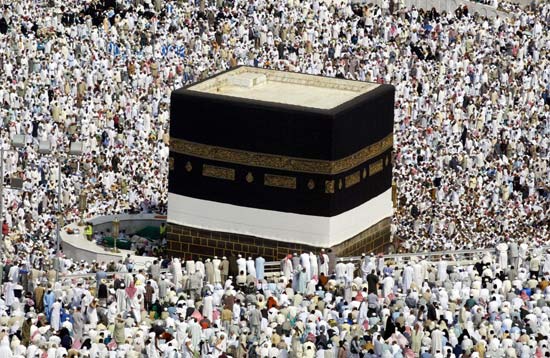
The Ka'bah, the House of Allah

Mushrikeen were there. And in front of everybody he said:

Those Who Show Off in Their Salah

Note: This is post #19 in our series on Tafseer of Juz ‘Amma (click the link to see all posts in this series).

In Surah Ma’oon, Allah says:

فَوَيْلٌ لِّلْمُصَلِّينَ

الَّذِينَ هُمْ عَن صَلَاتِهِمْ سَاهُونَ

الَّذِينَ هُمْ يُرَاءُونَ

وَيَمْنَعُونَ الْمَاعُونَ

Translation: So woe to those who pray; those who are heedless of their prayer, those who make show [of their deeds]; And withhold [simple] assistance (al-ma’oon). [Surah Ma’oon, verses 4-7]

Allah says, “so woe to those who pray.” Don’t stop at this ayah! People who pray are not cursed by Allah! Allah continues: those who show off in their prayer, …

Du’a for Laziness and Incapability

10131447

The Prophet (salallahu alayhi wa sallam) used to make a du’a:

اللّهُمَّ إنِّي أعُوذُبِكَ مِن العَجزِ وَ الكَسلٍ

Transliteration: Allahumma inniy a’oothubika min al-ajzi wal-kasli
Translation: O Allah, I seek refuge in you from incapability and laziness.

Why is this du’a important? For two reasons:

  • Laziness is an attribute of munafiqeen. If this wasn’t bad enough, being lazy leads to procrastination, which leads to its own set of problems.
  • It’s common these days for people to say “I can’t do it.” Like “I can’t pray at work,” or “I can’t achieve X.” The Prophet (salallahu alayhi wa sallam) would say a’oothubillah to that kind of talk. Think about it!

Action Plan:

Ask the Readers: Questions about Salah?

Edit: Jazakumullahu khayran to everybody who provided feedback. It seems like there’s a lot of demand for this kind of thing. Insha’Allah we’ll see more posts like this in the future.

man prostrating on his face

Bismillah.

Salah. We cannot emphasize the importance of salah–the dividing line of Islam and Kufr. The first thing asked about on the Day of Judgment. The last thing the Messenger of Allah mentioned before he passed away.

Forgiveness After Forgiveness After Forgiveness

There’s a beautiful du’a that Allah mentions near the end of Surah Baqarah:

وَاعْفُ عَنَّا وَاغْفِرْ لَنَا وَارْحَمْنَا

Translation: So do ‘affuw on us. And forgive us. And have mercy on us. [Surah Baqarah, verse 286]

Allah mentions three things, in order:

  1. ‘Affuw ‘annaa: Affuw linguistically means to erase something; to obliterate something; to completely destroy something and leave no traces of it whatsoever. This du’a is saying: make affuw of our sins. Remove them completely.
  2. Waghfir lanaa: Ghafira linguistically means to protect–that’s why a helmet is called a mighfaar. Read up about Allah’s two names: Al-Ghafuwr and Al-Ghaffaar. Here, the du’a is saying: and if you do not ‘affuw our sins, forgive us, and protect us from the consequences of them.
  3. Warham naa: Rahmah is mercy; Allah has two names related to this quality–Ar-Rahman and Ar-Raheem. Here, the du’a is saying: and if you do not even forgive our sins, then have mercy on us! Subhanallah!

What an amazing du’a! Do affuw of our sins; and if not, forgive us and protect us from their effects; and if not, have mercy on us!

Creative Qiyaam-ul-Layl Alarms

Bismillah.

We all know that we should pray tahajjud, aka qiyaam-ul-layl. It’s well established in the deen that this is a very, very rewarding thing to do (but it’s not fard, so don’t sweat it if you’re not doing it). Some motivational factors for this include:

  • The Prophet (صلى الله عليه و سلم) used to pray Qiyaam-ul-Layl until his legs swelled. When asked why–since Allah has forgiven all his past and future sins, he said: Should I not be a grateful slave? [Agreed Upon]
  • Do you have goals you’re trying to achieve? Is there something you really, really want? Are you willing to pray Qiyam and cry in front of Allah for it? Because nothing will turbo-charge your success like Qiyam.
  • On the day of Judgment, Allah will ask about YOUR salah. If it’s not 100% perfect, He will not even LOOK at your other deeds. BUT! If your Fard salaah is not perfect, Allah will patch it up with your nafl and sunnah prayers–including Qiyaam-ul-Layl. [There’s a hadith related to this recorded in the collection of At-Tabari]

So what are some creative, unorthodox, unusual timers you use to wake you up? Share it in the comments! Some of the one’s I’ve seen (that are effective) are: