

Tafseer

Du’a for Wealth and Poverty

ghunan yutghee

Note: This is the 5th post in our series on Tafseer of Juz ‘Amma.

In our last post, we talked about how the human race does taghaa if they see themselves as self-sufficient. Living in western societies, we see this all around us–people racing, fighting, stealing, overworking, to make a few more dollars so that they can “make it.” They buy lottery tickets so they can “make it” and be rich, rich rich!

Self-Sufficient?

Note: This is our 4th post in our series of Tafseer of Juz ‘Amma.

a mountain of gold

Allah says, in ayahs 6-7 of Surah Iqraa:

كَلَّا إِنَّ الْإِنسَانَ لَيَطْغَى

أَن رَّآهُ اسْتَغْنَى

Translation: No! [But] indeed, man transgresses. Because he sees himself self-sufficient. [Surah Iqraa, verses 6-7]

Kalla is a very stern, emphatic warning. If your kid is being bad, you say “laa, laa;” and then they grab something hot off the stove and you say “KALLA!” It’s a very strong negation; the thing it negates is either understood, or mentioned in the previous ayah.

Making a Statement

Note: This is the third post in our series of Tafseer of Juz ‘Amma.

85071443

From the opening ceremonies, to the first move of world leaders, people like to send a message. The intense revelation of the Qur’an is no different. The timing, style and content, sends a message to the final Prophet (saw) and to all of humanity.

Allah (swt) starts the revelation commanding the Prophet to read “Recite in the name of your Lord who created.” The big statement? It’s all about knowledge. Allah reveals that knowledge will be the way of those who submit to him. Knowledge brings honour to our scholars and courage to our leaders. Knowledge is an Islamic tradition. The carriers of this deen understood and embraced this critical message – they embodied it.

Arabic Analysis for First Revelation

This is the second post in our series of Tafseer of Juz ‘Amma.

trees sway in the sunlight

The first five ayaat of Surah Iqraa are:

اقْرَأْ بِاسْمِ رَبِّكَ الَّذِي خَلَقَ

خَلَقَ الْإِنسَانَ مِنْ عَلَقٍ

اقْرَأْ وَرَبُّكَ الْأَكْرَمُ

الَّذِي عَلَّمَ بِالْقَلَمِ

عَلَّمَ الْإِنسَانَ مَا لَمْ يَعْلَمْ

Word-for-word translations are pretty common these days (like this one, which has Surah Iqraa), so I’m going to touch lightly on that, and do a bit more grammar. Ready? Here goes!

The Beginning of Revelation

This is the first post in our series of Tafseer of Juz ‘Amma.

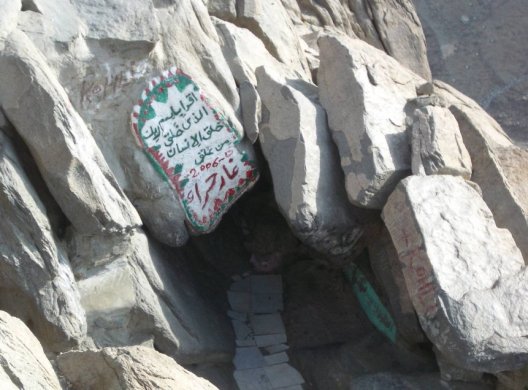
The entrance to Cave Hira

Although the story is well-known amongst the Muslims, we will recap the story of the first revelation: Surah Iqraa (also known as Surah ‘Alaq), revealed in Mecca.

Imam Ahmed ibn Hanbal (rahimahullah) relates from ‘Aisha (radiallahu ‘anhaa) that the Prophet (salallahu alayhi wa sallam), for six months before revelation, would see true dreams that would happen the next day–day after day after day, for six months.

Forgiveness After Forgiveness After Forgiveness

There’s a beautiful du’a that Allah mentions near the end of Surah Baqarah:

وَاعْفُ عَنَّا وَاغْفِرْ لَنَا وَارْحَمْنَا

Translation: So do ‘affuw on us. And forgive us. And have mercy on us. [Surah Baqarah, verse 286]

Allah mentions three things, in order:

  1. ‘Affuw ‘annaa: Affuw linguistically means to erase something; to obliterate something; to completely destroy something and leave no traces of it whatsoever. This du’a is saying: make affuw of our sins. Remove them completely.
  2. Waghfir lanaa: Ghafira linguistically means to protect–that’s why a helmet is called a mighfaar. Read up about Allah’s two names: Al-Ghafuwr and Al-Ghaffaar. Here, the du’a is saying: and if you do not ‘affuw our sins, forgive us, and protect us from the consequences of them.
  3. Warham naa: Rahmah is mercy; Allah has two names related to this quality–Ar-Rahman and Ar-Raheem. Here, the du’a is saying: and if you do not even forgive our sins, then have mercy on us! Subhanallah!

What an amazing du’a! Do affuw of our sins; and if not, forgive us and protect us from their effects; and if not, have mercy on us!

A Due Reward: Surah Ikhlas – Pt.5 (Salat 101)

Bismillah walhamdolilah wasalatu wasalam ‘ala Rasool Allah

SubhanAllah! How fast Ramadan came and how fast it went. It truly saddens my heart to see this blessed month go away, to see it slipping away, to have to say good-bye. In a few days, the shayateen will be let loose and the difficulties will emerge. Ya Rabbi! Give this ummah the strength to fight the shayateen and keep us steadfast in the deen. Ameen.

The Qur’an is Mubaarak

Bismillah.
Allah subhanahu wa ta’ala says in Surah Saad verse 29,
كِتَابٌ أَنْزَلْنَاهُ إِلَيْكَ مُبَارَكٌ لِيَدَّبَّرُوا آيَاتِهِ وَلِيَتَذَكَّرَ أُولُو الأَلْبَابِ

<p>
  <strong>“(This is) a Mubaarak Book which We have sent down to you, that they may reflect upon its signs, and that men of understanding may remember.”</strong> (Saad: 38:29)
</p>

<p>
  Mubaarak is that which is full of barakah. And barakah is from the root, <em>ba ra kaaf</em> (ب ر ك), and barakah is that which lasts long and has the ability to increase. When something is Mubaarak, it includes three meanings:
</p>

<ul>
  <li>
    It is a source of katheerul khayr, full of goodness. So Mubaarak is that which has a lot of good and is where unexpected and expected good is received.
  </li>
  <li>
    Source of katheerul fawaa’id, a lot of benefits.
  </li>
  <li>
    That which is thaabit, firm and has continuity. The blessings one receives from it is firm, it is not a temporary benefit but has permanence.
  </li>
</ul>

<p>
  So how is the Qur’an <em>Mubaarak</em>? Let’s look at all three of these meanings:
</p>

<ul>
  <li>
    the Qur’an is a source of katheerul khayr: it is a guidance and mercy for the believers, it gives the news of Jannah, it is a healing, it contains commandments that guide us, it is a light, it is an admonition and advice from Allah, and it is a source of reward (10 rewards per letter).
  </li>
  <li>
    the Qur’an is a source of katheerul fawaa’id: it benefits in both this life and the next. In this dunya it is a furqaan for us-the criterion between right and wrong, it increases one in knowledge and it is a source of protection. In the aakhirah, it is a means to ascend to the highest levels of Jannah (hadeeth: iqra’ war taqi, read and ascend!), it an intercessor and shade for its companions, and it will accompany its readers in the grave.
  </li>
  <li>
    the Qur’an contains firm, continuous and permanent blessings: the Rabb Who revealed it is Blessed, the Prophet it was revealed to is blessed (alayhi salaatu wa salaam), the month it was revealed in is blessed, the night it was sent down in is blessed, the city it was revealed in is blessed, those who store it in their heart are blessed, those who learn it are blessed and those who teach it are blessed.
  </li>
</ul>

<p>
  So ask yourself: am I missing out on this Mubaarak Book? Have you tasted some of its goodness, benefits and blessings?
</p>

<p>
  may Allah ta’ala make us among the companions of the Qur’an, Ameen.
</p>

The Unborn: Surah Ikhlas – Pt. 3 (Salat 101)

Bismillah walhamdolilah wasalatu wasalam ‘ala Rasool Allah

Asalamu ‘alaikum wa rahmatullahi wa barakatahu,

First and foremost, Ramadan Kareem! May Allah azza wa jal give us all the opportunity to take advantage of this blessed month and to make it a means of us attaining His Paradise. Ameen.

Due to Ramadan, I’ve found myself to be quite busy. Nonetheless, I do apologize for not having written anything for the past few makes. Please forgive me for my shortcomings.

The Ones in Need: Surah Ikhlas – Pt. 2 (Salat 101)

Bismillah walhamdolilah wasalatu wasalam ‘ala Rasool Allah

Asalamu ‘alaikum!

Continuing in our journey of understanding the 112th chapter of the Qur’an, Allah says:

اللَّهُ الصَّمَدُ

Allah, the Self-Sufficient [Surah Ikhlas V.2]

Recall, the greatest name of the Lord of the heavens and the earth is Allah. This is the name that He has chosen to name Himself with, and it is the grand name to which all His other Names and Attributes are attributed to. This is seen in the saying of Allah: